- July 23, 2026
Introduction
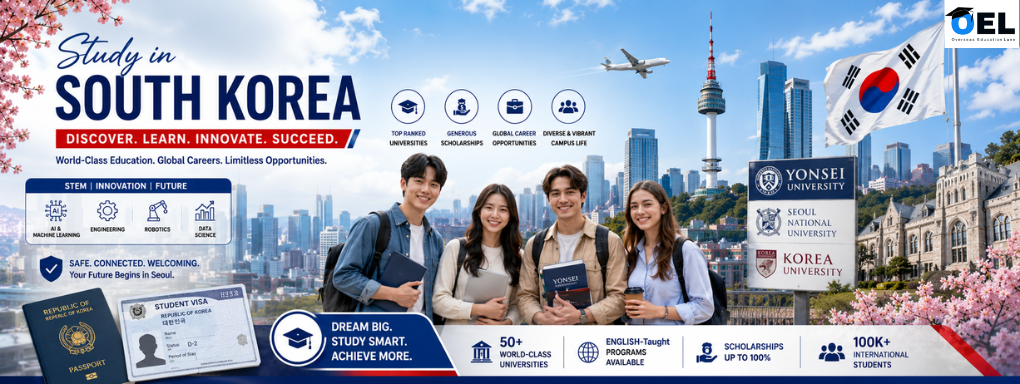
South Korea continues to attract thousands of international students every year with its globally recognized universities, cutting-edge research opportunities, and growing career prospects. To make Seoul an even more attractive destination for global talent, the Seoul Metropolitan Government has introduced the Seoul Metropolitan-Recommended Visa, a special initiative designed to support international students pursuing STEM (Science, Technology, Engineering, and Mathematics) degrees at participating universities in Seoul. The program offers additional benefits beyond those available under a standard D-2 student visa, helping students gain valuable work experience, adapt to life in Korea, and prepare for long-term careers after graduation.
If you're planning to study in South Korea in 2026 and want to maximize your academic and career opportunities, understanding this visa program is essential. Unlike a regular student visa, the Seoul Metropolitan-Recommended Visa provides eligible students with enhanced part-time work opportunities, internship-related leave of absence, career development programs, and access to various settlement and support services offered by the Seoul Metropolitan Government.
In this complete guide, we'll explain what the Seoul Metropolitan-Recommended Visa is, why it was introduced, who is eligible, its benefits, participating universities, application process, language requirements, internship opportunities, and everything international students need to know before applying.
What is the Seoul Metropolitan-Recommended Visa?
The Seoul Metropolitan-Recommended Visa is a special visa program designed by the Seoul Metropolitan Government and approved by the Ministry of Justice to attract and support international students who are expected to become the next generation of global talent in STEM fields, including areas such as robotics, artificial intelligence (AI), biotechnology, and FinTech.
The program is intended for international students holding a D-2 student visa who are enrolled in associate, bachelor's, master's, or doctoral degree programs in eligible STEM disciplines at participating universities in Seoul. Rather than replacing the existing D-2 visa, it builds upon it by offering additional privileges that help students gain practical experience, improve career readiness, and integrate more successfully into life in Seoul.
According to the program guide, the application process begins with the student's university. Eligible students are nominated by their university, after which the Seoul Metropolitan Government issues a mayoral recommendation, and the Ministry of Justice reviews the application before confirming the Seoul Metropolitan-Recommended Visa. This collaborative process ensures that students who meet the program's academic and eligibility requirements can benefit from additional support throughout their studies.
Why Was This Visa Introduced?
The Seoul Metropolitan-Recommended Visa was introduced to strengthen Seoul's position as a global education and innovation hub by attracting talented international students in high-demand STEM disciplines. As industries such as artificial intelligence, robotics, biotechnology, engineering, and advanced technology continue to grow, Seoul aims to encourage highly skilled students to study, gain professional experience, and eventually contribute to the city's workforce and economy.
Beyond supporting academic success, the program focuses on helping international students build long-term careers in South Korea. The guide highlights that visa holders receive access to programs that assist with adapting to life in Seoul, developing career skills, participating in internships, and exploring employment opportunities after graduation. The initiative also connects students with support services such as cultural integration programs, counseling, Korean language and culture training, and career development activities to make their transition into Korean society smoother.
Another important objective of the program is to create stronger links between universities, government agencies, and industry. By allowing greater flexibility for internships, increasing part-time work opportunities for eligible students, and offering structured career and settlement support, the Seoul Metropolitan Government seeks to retain talented international graduates who can contribute to Seoul's future innovation ecosystem.
Key Benefits of the Seoul Metropolitan Recommended Visa
The Seoul Metropolitan Recommended Visa has been introduced to provide international students with opportunities that go beyond a standard D-2 student visa. While students continue to enjoy all the rights associated with a regular student visa, this special program offers additional academic, professional, and settlement benefits that make studying and building a career in Seoul more rewarding.
One of the most significant advantages is the enhanced part-time work allowance. Eligible students can work up to 30 hours per week during the academic semester, with the possibility of an additional five hours per week if they study at a certified university, maintain outstanding academic performance, and meet higher Korean language proficiency requirements. Students who satisfy the language criteria can also work without hourly restrictions during weekends, public holidays, and university vacations, subject to obtaining the required part-time work permit.
Another unique benefit is the opportunity to take a leave of absence for internships, which is generally not permitted under a standard D-2 visa. Eligible students can take internship leave once per year to gain professional experience in approved fields while continuing to receive support under the program. This initiative helps students develop practical skills, expand their professional network, and improve their employment prospects after graduation.
Beyond employment opportunities, the visa also provides access to a wide range of career development and settlement support programs. Students may participate in internship partnerships with public institutions and private companies, career preparation workshops, entrepreneurship training, digital skills development, industry visits, and networking events designed to prepare them for the Korean job market. The program also includes Korean language and culture training, visa counseling, TOPIK examination fee support, and practical guidance for living and working in Seoul.
Visa holders can also benefit from services offered through Seoul's international support network, including the Seoul Global Center, Seoul Global International Student Support Center, Global Village Centers, and Foreigner Resident Centers. These facilities provide assistance with legal and administrative matters, housing guidance, counseling, Korean language education, community activities, and cultural adaptation, helping international students settle comfortably in Seoul throughout their academic journey.
Who is Eligible for the Visa?
The Seoul Metropolitan Recommended Visa is intended for new international students who hold or will obtain a D-2 student visa and are enrolling in eligible STEM (Science, Technology, Engineering, and Mathematics) degree programs at participating universities in Seoul. The program is available to students pursuing associate, bachelor's, master's, or doctoral degrees, with the objective of attracting talented individuals in high-demand fields such as artificial intelligence, robotics, biotechnology, engineering, and FinTech.
To qualify, applicants must be admitted to one of the participating universities and be nominated by their institution before receiving a recommendation from the Seoul Metropolitan Government. The guide also states that students are expected to maintain satisfactory academic performance. For the initial visa application, a minimum GPA of C (2.0) in the most recent semester is generally required, although this requirement is waived for students whose first-semester transcript has not yet been issued.
The program further encourages students to develop Korean language proficiency. Depending on the student's academic level, eligibility for certain visa benefits may require meeting specific standards through TOPIK, the Korea Immigration and Integration Program (KIIP), or completion of the appropriate King Sejong Institute language course. The guide also notes that applicants with qualifying English-language test scores or those from English-speaking countries may be exempt from the Korean language proficiency requirement in certain cases.
It is important to note that, according to the program guide, this initiative is designed primarily for newly enrolling international students. Students who are already enrolled before the applicable intake are not eligible to apply under this program.
Participating Universities in Seoul
As outlined in the guide, the Seoul Metropolitan Recommended Visa currently includes eight participating universities offering eligible STEM-related programs. The Seoul Metropolitan Government also notes that additional universities may be added to the program in the future.
The participating universities are:
- - Kookmin University – College of Creative Engineering (Undergraduate & Graduate)
- - aSSIST University – AI Graduate School
- - Seoul National University – Including the College of Engineering, College of Natural Sciences, College of Agricultural and Life Sciences, Graduate School of Public Health, Graduate School of Environmental Studies, Graduate School of Data Science, Division of Advanced Convergence, and other eligible STEM schools
- - University of Seoul – College of Engineering, College of Natural Sciences, and College of Urban Science
- - Seoul Women's University – College of Science and Convergence Technology, Division of Global ICT Humanities, College of Interdisciplinary Studies for Emerging Industries, and School of Art and Design
- - Sungshin Women's University – College of Engineering and College of Natural Sciences (Undergraduate & Graduate)
- - Sejong University – College of Natural Sciences, College of Life Sciences, College of Artificial Intelligence Convergence, and College of Engineering
- - Chung-Ang University – College of Natural Sciences, College of Engineering, College of ICT Engineering, College of Software, College of Bioengineering, and CAU Graduate School
These universities were selected because of their strong focus on science, technology, engineering, artificial intelligence, data science, biotechnology, and other innovation-driven disciplines. Students admitted to eligible programs at these institutions may become candidates for the Seoul Metropolitan Recommended Visa, subject to meeting the program's academic and eligibility requirements and receiving a university nomination.
Eligible STEM Programs
The Seoul Metropolitan Recommended Visa is specifically designed for international students pursuing degrees in STEM (Science, Technology, Engineering, and Mathematics) and other future-focused disciplines that support Seoul's innovation ecosystem. Rather than covering every academic program, the visa is available only to students enrolled in approved STEM colleges, schools, and graduate programs at participating universities. According to the official program guide, the initiative particularly targets students in high-demand fields such as artificial intelligence (AI), robotics, biotechnology, FinTech, engineering, data science, and advanced convergence technologies, helping them gain valuable academic and industry experience while studying in Seoul.
Each participating university has identified specific colleges and departments that qualify under the program. For example, Seoul National University includes eligible schools such as the College of Engineering, College of Natural Sciences, College of Agricultural and Life Sciences, Graduate School of Data Science, Graduate School of Public Health, Graduate School of Environmental Studies, Division of Advanced Convergence, and Graduate School of Convergence Science and Technology. Similarly, Sejong University offers eligible programs through its College of Artificial Intelligence Convergence, College of Engineering, College of Natural Sciences, and College of Life Sciences, while Chung-Ang University includes the College of ICT Engineering, College of Software, College of Bioengineering, College of Engineering, and College of Natural Sciences.
Other participating institutions also contribute specialized STEM programs. Kookmin University includes its College of Creative Engineering, aSSIST University participates through its AI Graduate School, University of Seoul includes the College of Engineering, College of Natural Sciences, and College of Urban Science, Seoul Women's University offers programs in Science and Convergence Technology, Global ICT Humanities, Emerging Industries, and Art & Design, while Sungshin Women's University includes both its College of Engineering and College of Natural Sciences. Students should always verify whether their intended department is included in the list of eligible programs before applying, as participation is limited to the designated colleges and may be updated by the Seoul Metropolitan Government in future intakes.
Language Requirements (TOPIK, KIIP & King Sejong Institute)
Language proficiency plays an important role in determining a student's eligibility for several benefits offered under the Seoul Metropolitan Recommended Visa. While admission requirements are determined by individual universities, the visa program itself encourages international students to develop Korean language skills through recognized language qualifications such as TOPIK (Test of Proficiency in Korean), the Korea Immigration and Integration Program (KIIP), or courses offered by the King Sejong Institute. These qualifications are particularly important for students seeking enhanced part-time work opportunities and other visa-related benefits.
According to the official guide, associate degree students and first- or second-year bachelor's students generally need to demonstrate TOPIK Level 3 or above, complete KIIP Level 3 (or achieve a pre-evaluation score of 61 or higher), or complete the King Sejong Institute Intermediate 1 course. Students in the third and fourth years of a bachelor's program, as well as those enrolled in master's and doctoral programs, are generally expected to meet a higher standard by obtaining TOPIK Level 4 or above, completing KIIP Level 4 (or achieving a pre-evaluation score of 81 or higher), or finishing the King Sejong Institute Intermediate 2 course.
The guide also provides certain exemptions. Applicants who can demonstrate sufficient English-language proficiency, such as TOEFL 530 (CBT 197 / iBT 71), IELTS 5.5, CEFR B2, TEPS 601, or NEW TEPS 327, are exempt from the Korean language proficiency requirement. In addition, students from countries where English is an official or native language are not required to submit Korean language proficiency documents for the purposes specified in the guide.
Developing Korean language skills not only helps students access additional visa benefits but also makes it easier to communicate in everyday life, secure internships, work part-time, and integrate into Korean society during and after their studies.
Academic Performance Requirements
To continue enjoying the benefits of the Seoul Metropolitan Recommended Visa, students are expected to maintain satisfactory academic performance throughout their studies. The official guide outlines different academic requirements depending on the benefit being applied for, emphasizing that students should consistently perform well in their university programs.
For the initial visa application, applicants are generally required to maintain a minimum GPA of C (2.0) in their most recent semester. However, this requirement is waived for newly admitted students whose first-semester academic transcript has not yet been issued.
Some enhanced visa benefits require stronger academic performance. For example, students seeking additional weekday part-time work hours beyond the standard allowance must study at a certified university, achieve an A (4.0) GPA or higher in their most recent semester, and meet the higher Korean language proficiency requirements specified in the program. Students who satisfy all of these conditions may qualify for an additional five hours of weekday part-time work while also enjoying unrestricted work during weekends and academic vacations, subject to obtaining the necessary work permit.
The guide also outlines separate academic criteria for students applying for an internship leave of absence. In these cases, applicants are generally expected to maintain a minimum GPA of B (3.0) in their most recent semester. This requirement is waived for master's and doctoral students if their first-semester transcript is not yet available. Students must also meet the applicable enrollment and language proficiency requirements before becoming eligible for internship-related benefits under the program.
How to Apply for the Seoul Metropolitan Recommended Visa
Unlike a standard student visa application, the Seoul Metropolitan Recommended Visa follows a structured recommendation process involving the student, the university, the Seoul Metropolitan Government, and the Ministry of Justice. Students cannot apply directly to the government without first being recommended by their university. Instead, eligible applicants must first secure admission to one of the participating universities in an approved STEM program and meet the program's academic and language requirements.
The application process begins with the participating university, which reviews whether the student satisfies the eligibility criteria established under the program. If the university determines that the student qualifies, it submits a recommendation to the Seoul Metropolitan Government. After reviewing the nomination, the Seoul Metropolitan Government issues the Mayor's Recommendation Letter, which is then forwarded to the Ministry of Justice for final visa review and approval. Only after this review process is completed can the applicant receive the benefits available under the Seoul Metropolitan Recommended Visa.
As part of the application, students are generally required to submit supporting documents such as their passport, Certificate of Admission, proof of enrollment in an eligible STEM program, academic transcripts (where applicable), language proficiency certificates, and any additional documents requested by the university or immigration authorities. Since individual universities may have their own internal deadlines for nominations, applicants should carefully monitor announcements issued by their institution and prepare all required documents well in advance.
Because visa policies and administrative procedures may change from one intake to another, students should always refer to the latest guidelines issued by their university, the Seoul Metropolitan Government, and the Ministry of Justice before submitting an application.
Part-Time Work Benefits
One of the most attractive features of the Seoul Metropolitan Recommended Visa is the enhanced flexibility it provides for part-time employment, allowing international students to gain valuable work experience while continuing their studies. Compared with a regular D-2 student visa, eligible students under this program may receive more generous working-hour allowances, helping them build professional skills, expand their networks, and support their living expenses in Seoul.
According to the official program guide, eligible students can work up to 30 hours per week during the academic semester after obtaining the necessary part-time work permission. Students who study at a certified university, maintain an A (4.0) GPA or above, and satisfy the prescribed Korean language proficiency requirements may qualify for an additional five hours of work each week, increasing their total weekday allowance to 35 hours per week.
The guide also provides additional flexibility outside normal class periods. Students who meet the language proficiency requirements can work without hourly restrictions on weekends, public holidays, and university vacations, provided they continue to comply with immigration regulations and obtain the required work authorization. These enhanced employment opportunities allow students to gain practical industry exposure while balancing their academic responsibilities.
Although the program expands work opportunities, academic performance remains the priority. Students are expected to maintain satisfactory grades and comply with both university regulations and immigration policies while engaging in part-time employment. Working without authorization or exceeding the permitted conditions may affect a student's immigration status, so obtaining the appropriate approval before starting any job is essential.
Internship and Leave of Absence Benefits
The Seoul Metropolitan Recommended Visa also offers a valuable opportunity for students to gain professional experience through internships, a feature that distinguishes it from the standard D-2 student visa. Recognizing the importance of practical industry exposure, the program allows eligible students to temporarily step away from regular coursework to participate in approved internship programs without losing the benefits associated with their student status.
Under the program, eligible students may apply for an internship-related leave of absence once per academic year. To qualify, students are generally required to maintain a minimum GPA of B (3.0) in their most recent semester and satisfy the applicable language proficiency requirements. The GPA requirement may be waived for newly admitted master's and doctoral students whose first-semester transcript has not yet been issued.
The internship must be connected to the student's field of study and approved through the appropriate university and immigration procedures. By allowing students to gain hands-on experience with companies, research institutions, or other approved organizations, the program helps bridge the gap between classroom learning and real-world employment. This practical exposure enables students to strengthen their professional skills, develop industry connections, and improve their employability after graduation.
In addition to internship leave, the program emphasizes long-term career development by encouraging collaboration between universities, government agencies, and employers. Through these partnerships, international students can participate in career-oriented activities that prepare them for successful employment in South Korea after completing their degrees, making the Seoul Metropolitan Recommended Visa an attractive pathway for students planning both their education and future careers in Seoul.
Career Support & Employment Assistance
One of the biggest advantages of the Seoul Metropolitan Recommended Visa is its strong focus on helping international students build successful careers in South Korea after graduation. Rather than limiting support to academics, the program connects students with career development initiatives designed to improve employability and strengthen links between universities, industries, and government organizations. Through these initiatives, students can gain practical experience, develop professional skills, and prepare for long-term employment in Seoul's rapidly growing innovation ecosystem.
According to the official program guide, eligible students may participate in various career support programs, including job fairs, networking events, company visits, internship opportunities, entrepreneurship support, startup programs, digital competency training, and employment preparation workshops. The Seoul Metropolitan Government also works with universities and industry partners to create opportunities that help international students understand the Korean job market and connect with potential employers before graduation.
Students can also receive guidance on resume preparation, interview skills, career planning, and employment pathways in South Korea. By combining academic education with industry exposure, the program aims to produce graduates who are well-equipped to contribute to Seoul's economy while building rewarding international careers.
"30 Days in Seoul" Program
As part of its broader support for international students, the Seoul Metropolitan Government also operates the "30 Days in Seoul" Program, an initiative designed to help overseas students experience life, culture, and career opportunities in Seoul. The program introduces participants to the city's educational institutions, innovation ecosystem, cultural heritage, and public services, making it easier for them to adapt to living and studying in South Korea.
During the program, students may participate in cultural activities, city tours, networking sessions, university visits, career-related events, and orientation programs that provide valuable insights into everyday life in Seoul. By offering these experiences early in a student's journey, the initiative helps international students become more familiar with Korean society while building confidence and meaningful connections with fellow students and local communities.
For many international students, adapting to a new country can be challenging. Programs like 30 Days in Seoul make this transition smoother by combining cultural immersion with practical information, allowing students to settle into their new environment more comfortably.
Support for International Students After Graduation
The support offered through the Seoul Metropolitan Recommended Visa does not end when students complete their degree. Recognizing that many graduates wish to continue their careers in South Korea, the Seoul Metropolitan Government provides a range of post-graduation services that assist international students as they transition from university life into the workforce.
Graduates can access services provided by organizations such as the Seoul Global Center, Seoul Global International Student Support Center, Global Village Centers, and Foreigner Resident Centers. These organizations offer assistance with employment guidance, visa counseling, legal consultations, Korean language and cultural education, housing information, community integration, and settlement support. They also organize networking events and educational programs that help international graduates adapt successfully to professional life in South Korea.
This long-term support reflects Seoul's commitment to attracting and retaining talented international graduates who can contribute to the city's economy, innovation, and global competitiveness.
Important Things Students Should Know Before Applying
Before applying for the Seoul Metropolitan Recommended Visa, students should carefully review the latest eligibility requirements issued by both their university and the Seoul Metropolitan Government. Since the program is available only through participating universities and designated STEM programs, applicants should first confirm that their chosen course qualifies under the scheme. Meeting the academic, language, and enrollment requirements is equally important, as these conditions determine eligibility for various visa benefits.
Students should also remember that university nomination is a mandatory part of the application process. Receiving admission to a participating university does not automatically guarantee selection for the program. Universities evaluate applicants before recommending eligible students to the Seoul Metropolitan Government, after which the Ministry of Justice conducts the final review. Preparing documents early, maintaining good academic performance, and improving Korean language proficiency can significantly strengthen an applicant's chances of benefiting from the program.
Because immigration regulations, participating universities, and visa policies may change over time, applicants should always verify the most recent information through official university announcements and the Seoul Metropolitan Government before submitting any application.
Frequently Asked Questions (FAQ)
Who can apply for the Seoul Metropolitan Recommended Visa?
The visa is intended for newly enrolling international students who hold or will obtain a D-2 student visa and are admitted to eligible STEM degree programs at participating universities in Seoul. Students must also satisfy the academic and language requirements specified in the program guide.
Can students apply directly for this visa?
No. Students cannot apply independently. Applications begin with the participating university, which nominates eligible students to the Seoul Metropolitan Government. After receiving the Mayor's recommendation, the Ministry of Justice reviews the application before granting the visa benefits.
Does the visa allow students to work part-time?
Yes. Eligible students can generally work up to 30 hours per week during the semester, with the possibility of additional working hours for students who meet higher academic and Korean language requirements. Special provisions also apply during weekends and university vacations, subject to immigration approval.
Is Korean language proficiency mandatory?
Certain benefits under the program require students to demonstrate Korean language ability through TOPIK, KIIP, or the King Sejong Institute. However, some applicants with qualifying English-language test scores or those from English-speaking countries may be exempt from the Korean language requirement in specific situations.
Can students continue working in South Korea after graduation?
The Seoul Metropolitan Recommended Visa includes career development and employment support designed to help international graduates explore professional opportunities in South Korea. However, graduates must still comply with the applicable immigration rules and obtain the appropriate post-study or work visa if they wish to continue working after completing their studies.
Final Thoughts
The Seoul Metropolitan Recommended Visa represents an important step in South Korea's efforts to attract talented international students and strengthen Seoul's position as a global education and innovation hub. By combining enhanced work opportunities, internship flexibility, career development programs, and comprehensive settlement support, the initiative offers students far more than a traditional study visa. For those planning to pursue STEM degrees in Seoul, it provides a valuable pathway to gain practical experience, develop professional skills, and build a successful future in one of Asia's leading technology and research destinations.
As visa policies, eligibility criteria, participating universities, and program benefits may change from year to year, students should always consult the latest information provided by their university and the relevant Korean authorities before beginning the application process.
Get Free South Korea Study Guidance from Overseas Education Lane (OEL)
Planning to study in South Korea and wondering whether you're eligible for the Seoul Metropolitan Recommended Visa? The experienced counselors at Overseas Education Lane (OEL) are here to help you every step of the way.
From university shortlisting and admissions to scholarship guidance, document preparation, visa assistance, SOP review, and interview preparation, our experts provide personalized support to help you achieve your study abroad goals with confidence.
Whether you're interested in Seoul National University, Chung-Ang University, Sejong University, University of Seoul, or any other leading institution in South Korea, OEL can help you choose the right program and guide you through the complete application process.
📞 Phone: +91 892 992 2525
📧 Email: [email protected]
Book your FREE counseling session today and take the first step toward studying and building your career in South Korea with expert guidance from Overseas Education Lane.
Top Destinations
Contact Us
-
 Overseas Education Lane
-
 +91 892 992 2525
-
 [email protected]
-
[email protected]
REQUEST AN ENQUIRY
we usually respond in seconds