
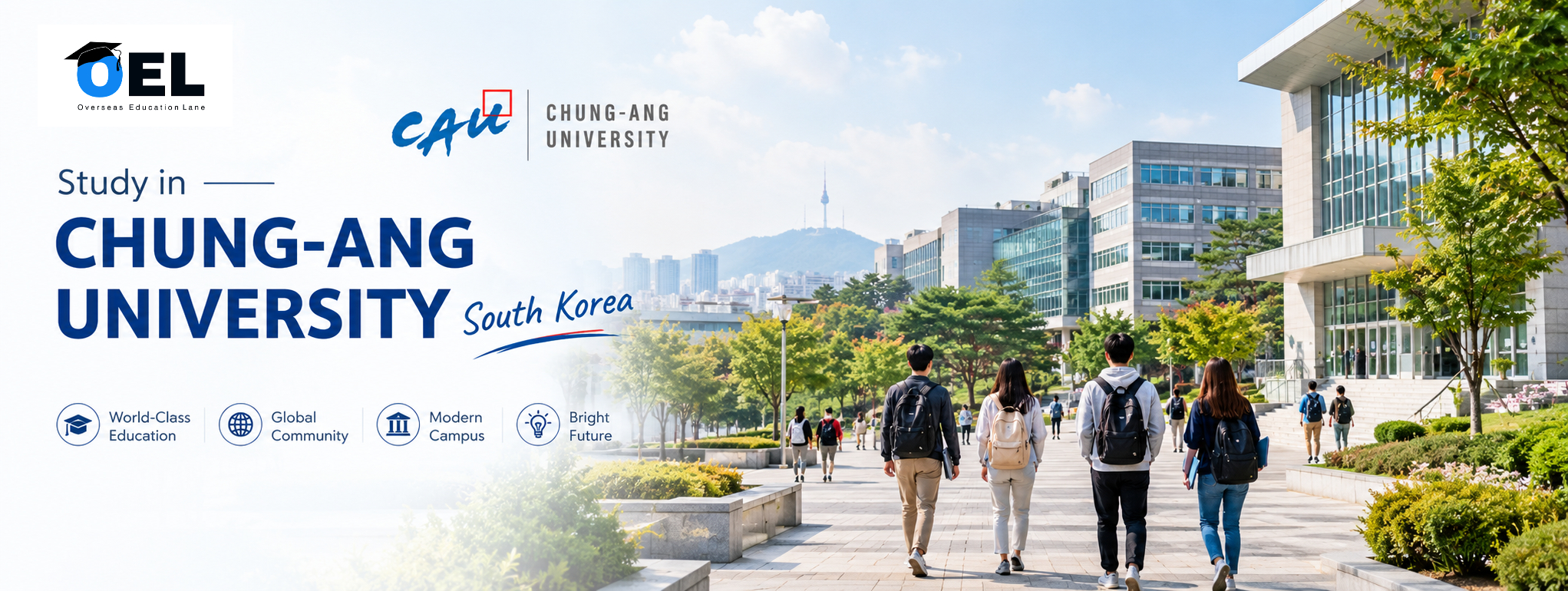
Chung-Ang University, South Korea: Admissions Guide
Are you planning to study in South Korea and looking for a university that offers a wide range of academic programs, an international learning environment, and opportunities to explore Korean culture? Chung-Ang University (CAU) is one institution worth considering.
Established in 1916, Chung-Ang University is a private university in South Korea with campuses in Seoul and Anseong. It offers undergraduate, master's, and doctoral programs across diverse academic fields, including business, engineering, medicine, pharmacy, social sciences, and the arts. Source: Official Chung-Ang University introduction.
For Indian students and other international applicants, choosing the right university involves more than looking at its name. You need to understand the available programs, language requirements, admission procedures, tuition expenses, scholarships, and student life before making a decision.
This guide explains what prospective international students should know about studying at Chung-Ang University and how to prepare for an application.
___________________________________________________________________________________________________________
About Chung-Ang University
Chung-Ang University is a comprehensive higher education institution offering programs at different academic levels. Its academic structure includes undergraduate colleges and graduate schools, providing options for students interested in both professional education and research.
The university's academic offerings cover a broad range of subjects, making it relevant to students with interests in business, technology, healthcare, humanities, and creative disciplines.
Here are some important facts about the university:
• Official name: Chung-Ang University
• Abbreviation: CAU
• Established: 1916
• Institution type: Private university
• Country: South Korea
• Main academic locations: Seoul and Anseong, South Korea
• Study levels: Bachelor's, master's, and doctoral programs
For verified institutional information and university updates, visit the official Chung-Ang University website.
___________________________________________________________________________________________________________
Campuses of Chung-Ang University
Chung-Ang University operates two campuses, and international students should check the location of their intended department before applying.
1. Seoul Campus
Seoul may appeal to students who want to experience metropolitan life while pursuing their academic goals. However, accommodation, transport, and everyday living expenses should be considered when preparing a budget.
2. Da Vinci Campus, Anseong
The Da Vinci Campus is located at 4726 Seodong-daero, Daedeok-myeon, Anseong-si, Gyeonggi-do.
Its location offers a different living environment from central Seoul. Students should consider the campus location when comparing accommodation, commuting arrangements, part-time work possibilities, and everyday expenses.
Important: Do not assume that every program is offered at both campuses. Confirm the campus assigned to your chosen department in the relevant admission guide.
___________________________________________________________________________________________________________
Courses and Programs at Chung-Ang University
One of the key considerations when selecting Chung-Ang University is whether your preferred subject is available at the appropriate study level.
The university's academic structure includes the following broad areas:
Academic field | Areas students may explore |
|---|---|
Business and Economics | Business administration, economics, and related subjects |
Humanities and Social Sciences | Languages, humanities, social sciences, and related disciplines |
Engineering and ICT | Engineering, information and communication technology, and related fields |
Natural Sciences and Biotechnology | Scientific disciplines and biotechnology |
Software and Virtual Convergence | Software, digital technologies, and related interdisciplinary areas |
Medicine, Pharmacy, and Nursing | Healthcare and medical-related disciplines |
Arts and Design | Creative arts, design, performance, and media-related subjects |
Sports Sciences | Sports and physical education-related fields |
These categories describe broad academic areas, not a guarantee that every subject is open to international applicants at every level or intake.
Bachelor's Programs
International students who have completed secondary education may explore undergraduate programs, subject to the university's academic, nationality, language, and documentation requirements.
Applicants should check whether their preferred department accepts international freshmen, whether transfer admission is available, and whether additional assessments apply to their intended course.
Master's Programs
Students who have completed a bachelor's degree can investigate relevant master's programs. Eligibility, prerequisite qualifications, language proficiency, and supporting documents depend on the department and graduate school.
Applicants should also determine whether their intended program is part of the general graduate school or a specialised graduate school.
Doctoral and PhD Programs
Students interested in advanced research can explore doctoral opportunities in relevant disciplines. They should check the department's research focus, degree-specific admission requirements, language criteria, and any requirements relating to a research proposal, interview, or prospective supervisor.
For the most accurate program information, consult the university's official admissions portal, which provides access to undergraduate and graduate admission information.
___________________________________________________________________________________________________________
Admission Requirements for International Students
Admission requirements at Chung-Ang University vary according to the degree level, department, and intake. Students should review the relevant international admission guidelines instead of relying on general requirements alone.
Before applying, prospective students should check the following areas.
Academic Qualifications
• Undergraduate applicants: Review the required secondary-school qualifications and graduation documentation.
• Transfer applicants: Confirm the required previous university studies, transferable credits, and eligibility for the intended year of entry.
• Master's applicants: Check the required bachelor's degree and any department-specific academic prerequisites.
• Doctoral applicants: Confirm the required previous degree, academic background, and additional research-related requirements, where applicable.
Applicants educated outside South Korea should also check the university's rules for document authentication, translations, and proof of academic qualifications.
Korean and English Language Requirements
Language requirements are particularly important for international applicants. Depending on the program, students may need to demonstrate Korean or English proficiency through an accepted examination or other evidence recognised by the university.
For example, Korean-language proficiency may be assessed through TOPIK, while English-language requirements may involve IELTS, TOEFL, or other accepted evidence where specified in the relevant guidelines.
However, a university offering some English-taught courses does not necessarily mean that an entire degree program is taught in English. Students should confirm the language of instruction for their particular department and program.
Do not assume that one language score is accepted for every course. Always check the current admission guide for the exact score, validity period, exemptions, and document-submission requirements.
Chung-Ang University Admission Process
If you are planning to apply to Chung-Ang University, the following steps can help you prepare.
Choose your program: Identify the degree level, department, campus, and intended intake.
Check eligibility: Review academic qualifications, nationality conditions, language requirements, and any additional selection criteria.
Prepare your documents: Gather academic certificates, transcripts, passport and nationality documents, and other materials specified in the admission guide.
Submit your application: Follow the official online application procedure and submit the required supporting documents within the specified period.
Complete additional assessments: Attend an interview, practical examination, portfolio review, or other assessment if required by your department.
Review the admission result: Follow the university's instructions regarding acceptance, tuition payment, and subsequent enrolment procedures.
Prepare for your student visa: After admission, follow the university's instructions and the applicable South Korean immigration requirements.
When Should You Apply?
Chung-Ang University publishes intake-specific admission schedules. Application periods, document-submission deadlines, interview dates, and enrolment procedures can differ between undergraduate and graduate admissions.
As of October 2026, the university has announced Spring 2027 international admission rounds. Applicants considering a later intake should consult the official admissions website for the latest available notices rather than assuming that an earlier deadline remains open.
Practical tip: Start preparing academic documents and language-test results well before applications open. Document authentication and international delivery can take additional time.
___________________________________________________________________________________________________________
Tuition Fees and Cost of Studying at Chung-Ang University
Tuition is an important part of planning your education in South Korea. At Chung-Ang University, fees depend on the academic field, degree level, and applicable academic year.
Undergraduate programs in humanities and social sciences may have different tuition rates from engineering, medicine, pharmacy, and arts programs. Graduate tuition is also determined by the relevant academic program.
Before deciding on a budget, account for:
• Tuition and any applicable admission fees.
• Accommodation, including university dormitories or private housing.
• Food, local transportation, and personal expenses.
• Health insurance and other required student expenses.
• Visa-related costs, document preparation, and travel.
Students should obtain the latest fee schedule for their intended program and intake. Do not use an older tuition table as a confirmed quotation for a future academic year.
For general information about recognised institutions, university profiles, and studying in South Korea, visit the South Korean government's Study in Korea portal.
___________________________________________________________________________________________________________
Scholarships at Chung-Ang University
Scholarships can help international students manage the cost of higher education. Chung-Ang University publishes scholarship opportunities and eligibility conditions that may depend on academic performance, language proficiency, degree level, and other selection criteria.
Depending on the applicable scheme, support may include a reduction in tuition fees. However, scholarship availability and award amounts should be confirmed for the specific admission cycle.
When comparing scholarship opportunities, check:
• Whether the scholarship is available to international students.
• Whether consideration is automatic or requires a separate application.
• Whether Korean or English language scores affect eligibility.
• Whether the scholarship covers full tuition or only a percentage.
• Whether academic performance or credit requirements must be maintained.
• Whether the award applies to one semester or multiple semesters.
Do not assume that admission automatically guarantees a scholarship or that a tuition reduction covers accommodation and living expenses.
___________________________________________________________________________________________________________
Student Life in South Korea
Studying at Chung-Ang University offers an opportunity to experience university life in South Korea while developing academic and intercultural skills.
Students can explore Korean language learning, cultural activities, local cuisine, public transportation, and student communities. The experience will differ depending on the campus, accommodation, academic workload, and personal interests.
International applicants should consider practical matters before departure, including housing, budgeting, access to healthcare, and the documents required for immigration procedures.
Learning basic Korean can also be helpful for daily communication, even when a student's academic program offers instruction in English.
___________________________________________________________________________________________________________
Is Chung-Ang University Right for You?
Chung-Ang University may be worth exploring if you:
• Want to pursue higher education in South Korea.
• Are interested in its available business, science, technology, healthcare, humanities, or creative programs.
• Meet the academic requirements for your intended degree.
• Can satisfy the relevant language and documentation criteria.
• Have considered tuition, living costs, campus location, and scholarship availability.
The right university depends on your academic background, career plans, preferred language of instruction, and budget. Compare your intended program with similar options before making a final decision.
___________________________________________________________________________________________________________
Frequently Asked Questions (FAQs)
1. Is Chung-Ang University open to international students?
Yes. Chung-Ang University publishes admission guidelines for international applicants at undergraduate and graduate levels. Eligibility depends on the degree, department, nationality conditions, and applicable intake requirements.
2. Does Chung-Ang University offer English-taught programs?
English-language requirements and teaching arrangements vary by department and degree. Check the relevant admission guide and confirm directly with the department whether your intended program is taught entirely in English or includes only selected English-taught courses.
3. How much is the tuition fee at Chung-Ang University?
Tuition varies by academic field, degree level, and academic year. Consult the current official admission guide for the fees applicable to your intended program.
4. Can international students receive scholarships?
Scholarships may be available under university-specific schemes. Eligibility, award amounts, coverage, and renewal conditions vary, so students should review the applicable scholarship guidelines before applying.
5. How can I apply to Chung-Ang University from India?
Start by selecting a suitable program, checking your academic and language eligibility, preparing the required documents, and following the official application instructions. Indian applicants should also prepare for the relevant student visa process after admission.
___________________________________________________________________________________________________________
Apply to Chung-Ang University with Overseas Education Lane
Planning to study at Chung-Ang University can involve several decisions, from selecting the right department to understanding language requirements, tuition fees, scholarships, and application documentation.
Overseas Education Lane (OEL) helps students explore study-abroad opportunities and prepare for the university application process. Our counselling team can help you review suitable programs, understand admission requirements, organise your application documents, and navigate the next steps towards studying in South Korea.
Contact Overseas Education Lane to enquire about free counselling and discuss your academic profile, preferred course, budget, and study plans. Let us help you take an informed next step towards your international education goals.
Important: Always confirm the latest admission deadlines, tuition fees, scholarship conditions, program availability, and visa requirements through the official university and government sources linked above, as these details can change.
Other Links
Top Destinations
Our Services
Contact Us
-
 Overseas Education Lane
-
 +91 892 992 2525
-
 [email protected]
-
[email protected]