
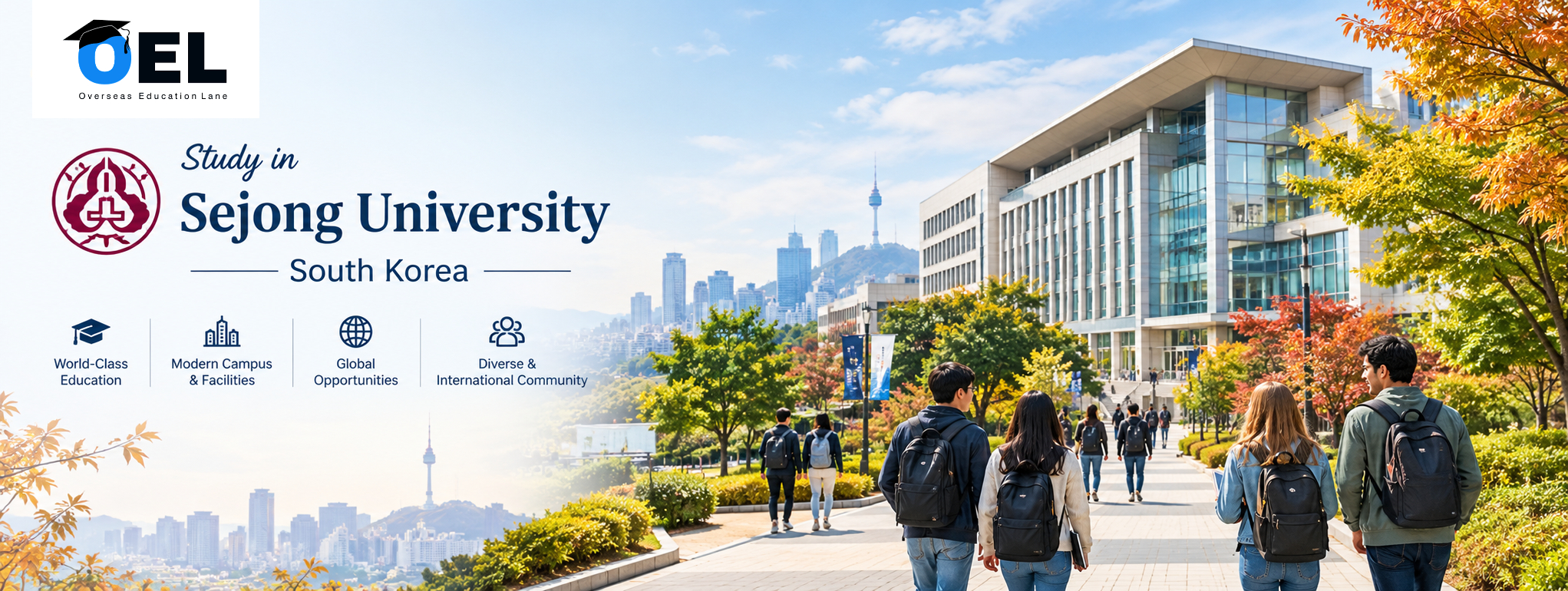
Sejong University: Courses, Admissions and Scholarships in South Korea
Are you planning to study in South Korea and looking for a university that offers international academic opportunities in Seoul? Sejong University is an option worth exploring for students interested in undergraduate and graduate education, including fields such as business, engineering, hospitality, arts and sciences.
Located in Seoul, South Korea, Sejong University welcomes students interested in building an international education experience. However, choosing the right programme requires more than looking at a university's reputation. You should also understand the admission requirements, language of instruction, tuition fees, scholarship opportunities and application schedule for your chosen course.
This guide explains what international students should know about Sejong University, how to approach the application process, and where to verify the latest official information before applying.
___________________________________________________________________________________________________________
1. About Sejong University, South Korea
Sejong University is a private university established in 1940. Its campus is located at 209 Neungdong-ro, Gwangjin-gu, Seoul, South Korea. The university has undergraduate and graduate programmes and is listed on the South Korean government's Study in Korea portal as an institution certified under the International Education Quality Assurance System (IEQAS). Official university information on Study in Korea.
For international students, studying in Seoul can provide access to a major metropolitan environment, public transportation, cultural experiences and a wide range of academic and professional networks. However, the suitability of the university depends on your chosen subject, language proficiency, budget and career plans.
___________________________________________________________________________________________________________
2. Courses at Sejong University for International Students
Sejong University offers undergraduate and graduate study options, with programme availability and admission requirements depending on the academic department and admission track.
Undergraduate programmes
Students who have completed secondary education may explore the university's international undergraduate admissions options. The university's official admissions pages list programmes and tracks such as:
• Global Business Administration
• Global Economics
• Global Public Administration
• Global Media and Communication
• Global Hospitality and Tourism Management
• Global Computer Engineering
• Global Professional Music
• Global Comics and Animation Technology
These are examples of programme names listed on the university's official undergraduate admissions page. Applicants should consult the latest admission guide to confirm which programmes are open to international applicants for their intended intake. View Sejong University's undergraduate admissions information.
Master's and doctoral programmes
Students who already hold a bachelor's or master's degree can investigate graduate study options through Sejong University's graduate admissions system.
The university has separate admissions information for different graduate schools, including:
• Graduate School of General Studies
• Graduate School of Business
• Graduate School of Special Studies
The available departments, degree types and research opportunities vary by graduate school. Students considering a master's or doctoral degree should check the relevant department's current admission guide before preparing their application.
Important: A programme's name alone does not establish that all classes are taught in English. Confirm the language of instruction for your specific department and programme before applying.
___________________________________________________________________________________________________________
3. Sejong University Admission Requirements for International Students
Admission requirements vary according to the degree level, department, nationality and language track. Meeting the minimum requirements does not necessarily guarantee admission.
Undergraduate admission
International undergraduate applicants should review the following areas:
• Educational qualification: Freshman applicants generally need to have completed, or be expected to complete, an eligible high-school qualification. Transfer applicants must meet the university's separate transfer requirements.
• Nationality requirements: The international admissions guide specifies eligibility rules relating to the applicant's nationality and that of their parents.
• Language proficiency: Applicants must satisfy the language requirements for their selected admission track.
• Academic documents: School transcripts, graduation certificates and other required supporting documents must be prepared according to the current application guide.
• Additional requirements: Interviews, document authentication or other supporting materials may be required depending on the programme and applicant's circumstances.
Graduate admission
For graduate study, the general academic pathway is:
• Master's degree: A bachelor's degree or an eligible expected graduation status.
• Doctoral degree: A master's degree or an eligible expected graduation status.
• Language proficiency: Evidence meeting the requirements of the chosen Korean- or English-track programme.
• Supporting documents: Academic transcripts, degree certificates and other documents requested by the graduate school.
• Department-specific evaluation: Some programmes may require an interview, research-related documents or additional assessment.
Applicants should not rely on general admission summaries alone. The latest university guide is the controlling source for the full eligibility conditions, exceptions and documentation requirements.
___________________________________________________________________________________________________________
4. English-Taught Programmes at Sejong University
One of the most important questions for international applicants is whether they can study in English without first becoming proficient in Korean.
Sejong University provides separate Korean-track and English-track international admissions information. This means applicants should investigate the track that matches their language ability rather than assume every department follows the same teaching language. See the university's official foreign admissions page.
Before selecting a course, confirm the following with the university:
Is the entire programme taught in English, or are only selected courses available in English?
Are examinations, assignments and laboratory sessions conducted in English?
Are internships or practical placements subject to Korean-language requirements?
Is Korean proficiency required for graduation, even for students admitted through an English track?
Does the department accept IELTS, TOEFL or another approved proof of English proficiency?
These questions are especially important for students planning to study business, engineering, hospitality, media or other specialised subjects.
Practical tip: Ask the relevant admissions office to confirm the actual language of instruction for your chosen department and intake in writing. A university-wide English-track option does not automatically mean every degree is available in English.
___________________________________________________________________________________________________________
5. Sejong University Tuition Fees and Cost of Studying
Before applying, students should prepare a budget that covers tuition and everyday living expenses in Seoul.
Tuition fees
Sejong University's tuition fees depend on the degree level, academic department and programme. Laboratory-based, engineering and arts programmes may have different fee structures from humanities or business programmes.
The Study in Korea university profile publishes tuition information for several programme categories, including graduate programmes, with figures identified as applying to the 2026 academic year. These figures should not be treated as a universal fee for every Sejong University student.
For an accurate budget, check the latest tuition schedule for your specific programme and confirm whether additional admission, registration or other compulsory fees apply.
Living expenses in Seoul
Your living costs will depend on your accommodation, food habits, transportation and personal spending. Include the following expenses in your budget:
• University accommodation or private rent
• Food and groceries
• Public transportation
• Health insurance and medical expenses
• Books, study materials and personal expenses
• Visa-related and initial settlement costs
Students should also plan for expenses that arise before their first semester begins, such as travel, accommodation deposits and other initial payments.
Is accommodation available?
Sejong University lists dormitory facilities and an international student dormitory on its Study in Korea profile. However, availability, room types, fees and allocation rules can change. Contact the university before relying on a dormitory place when calculating your total cost.
Budgeting tip: Calculate your expected cost for the full academic year, not just one semester's tuition. This helps you understand whether your available funds and any scholarship support will be sufficient.
___________________________________________________________________________________________________________
6. Scholarships at Sejong University for International Students
Scholarships can help international students manage tuition expenses. Sejong University lists several scholarship categories, with eligibility depending on the degree level, academic performance, language scores and other conditions.
Examples listed on the university's Study in Korea profile include:
• Undergraduate international scholarships: Certain awards are based on official language proficiency results and may cover a portion of tuition for the first semester.
• Academic performance scholarships: Eligible continuing undergraduate students may receive tuition support based on their previous-semester academic performance and credit completion.
• Graduate language scholarships: Graduate students may qualify for tuition reductions based on approved language scores and applicable academic conditions.
• Sejong Prep Course-related support: Certain undergraduate applicants who meet the relevant programme and scholarship conditions may qualify for additional tuition support.
The published scholarship categories and award conditions are available through the official Study in Korea profile for Sejong University.
How can you improve your scholarship application?
Check which scholarships apply to your degree level and admission track.
Prepare valid language proficiency results if required.
Maintain strong academic records.
Read the latest scholarship rules to understand renewal requirements and exclusions.
Confirm whether the award covers tuition only or includes other costs.
Important: Scholarship availability and award percentages can change between admission cycles. Do not assume that qualifying for admission automatically qualifies you for a scholarship. Confirm the latest conditions in the relevant admission guide.
___________________________________________________________________________________________________________
7. Sejong University Admission Process for 2027
If you are planning to apply for the 2027 academic year, start by identifying the correct intake and degree-level admission guide.
Sejong University's official international admissions website lists the application process and intake-specific deadlines.
For the Spring 2027 undergraduate international admissions, the second-round application deadline is listed as 13 November 2026 at 5:00 p.m. Korean Standard Time (KST). The university also publishes separate application information for graduate admissions. Check the applicable guide carefully because the requirements and schedules can differ by programme.
Step-by-step application process
Step 1: Choose your programme
Identify the degree, department and language track that match your educational background and career goals.
Step 2: Review the official admission guide
Check eligibility, language requirements, document specifications, application fees and any department-specific conditions.
Step 3: Prepare your documents
Depending on your application, these may include:
• Passport and identification documents
• Academic transcripts and graduation certificates
• Official language proficiency results, if required
• Proof of family relationship or nationality, where required
• Financial-support documents
• Additional forms, recommendations or research documents, where applicable
The exact list must be taken from the admission guide for your country and programme.
Step 4: Submit the online application
Complete the application and upload the required documents within the official application period. Follow instructions for sending any documents that must also be submitted in original form.
Step 5: Attend an interview if required
The university may conduct interviews depending on the admission track or department.
Step 6: Check the admission result
Follow the official admissions portal for results, additional document requirements and tuition payment instructions.
Step 7: Complete enrolment and visa preparations
After admission, follow the university's instructions for payment and the documents needed for your student visa application. Admission and visa approval are separate processes.
For current deadlines and application instructions, use the Sejong University One Stop Service Center.
___________________________________________________________________________________________________________
8. Student Visa and Preparation for Studying in South Korea
International students planning a full degree in South Korea generally need to follow the appropriate student visa process. The documents and procedures depend on the type of study, the applicant's circumstances and the current immigration requirements.
Before travelling, make sure you understand:
• The documents required after receiving your admission letter
• Financial evidence and other supporting documentation
• The applicable student visa category
• Health insurance and university registration requirements
• Accommodation arrangements and arrival dates
Do not make non-refundable travel arrangements until you understand the university's enrolment timeline and the status of your visa application. Check the current instructions issued by the relevant Korean embassy or consulate for applicants in your country.
___________________________________________________________________________________________________________
9. Is Sejong University a Good Choice for Indian Students?
Sejong University may be worth considering if you want to study in Seoul and find a programme that fits your academic background, career interests and budget.
It may be particularly relevant to students exploring business, economics, hospitality and tourism, computer engineering, artificial intelligence, media, creative studies or postgraduate education.
Before making a final decision, compare the university against your priorities:
• Course suitability: Does the curriculum match your intended career?
• Language of instruction: Can you meet the programme's language requirements?
• Total cost: Can you afford tuition and living expenses without relying on an uncertain scholarship?
• Career plans: Are the skills and practical opportunities relevant to your goals?
• Student support: Have you confirmed accommodation options and support available to international students?
For Indian applicants, it is also important to prepare academic documents carefully and confirm any country-specific document authentication requirements before submitting an application.
Choosing a university should be based on the fit between your goals and the actual programme, rather than location or reputation alone.
___________________________________________________________________________________________________________
10. Frequently Asked Questions About Sejong University
Is Sejong University in Seoul, South Korea?
Yes. Sejong University is located at 209 Neungdong-ro, Gwangjin-gu, Seoul, South Korea. Its official address is listed on the Study in Korea university profile.
Does Sejong University offer English-taught programmes?
The university provides separate English-track and Korean-track admissions information. However, English-track availability does not mean that every department or degree is fully taught in English. Confirm the teaching language of your chosen programme with the university.
Can Indian students apply to Sejong University?
Indian students can explore the university's international admissions routes, provided they meet the eligibility and documentation requirements for the selected programme and intake. Applicants should review the latest official admission guide before applying.
Does Sejong University offer scholarships to international students?
Yes. The university's published scholarship information includes undergraduate awards and graduate tuition support, with conditions linked to factors such as language proficiency and academic performance. Eligibility and award amounts depend on the applicable scholarship rules.
What is the deadline for Sejong University Spring 2027 undergraduate admission?
The official admissions portal lists 13 November 2026, at 5:00 p.m. KST, as the deadline for the second round of Spring 2027 undergraduate international admissions. Applicants should check the portal for updates and confirm the deadline applicable to their chosen programme.
___________________________________________________________________________________________________________
Plan Your Sejong University Application with Overseas Education Lane
Planning to study at Sejong University? The right preparation can help you identify suitable courses, understand language requirements, organise your academic documents and explore potential scholarship opportunities.
Overseas Education Lane (OEL) can help you navigate the study-abroad planning process, from researching South Korean universities to preparing for admissions and visa procedures.
Contact OEL to enquire about counselling for Sejong University and other study options in South Korea. Discuss your academic background, preferred course, budget and intake with a counsellor so you can make an informed decision about your next steps.
Application deadlines, tuition fees, programme availability and scholarship conditions may change. Always confirm the latest information using the official university sources linked in this article before applying.
Other Links
Top Destinations
Our Services
Contact Us
-
 Overseas Education Lane
-
 +91 892 992 2525
-
 [email protected]
-
[email protected]