
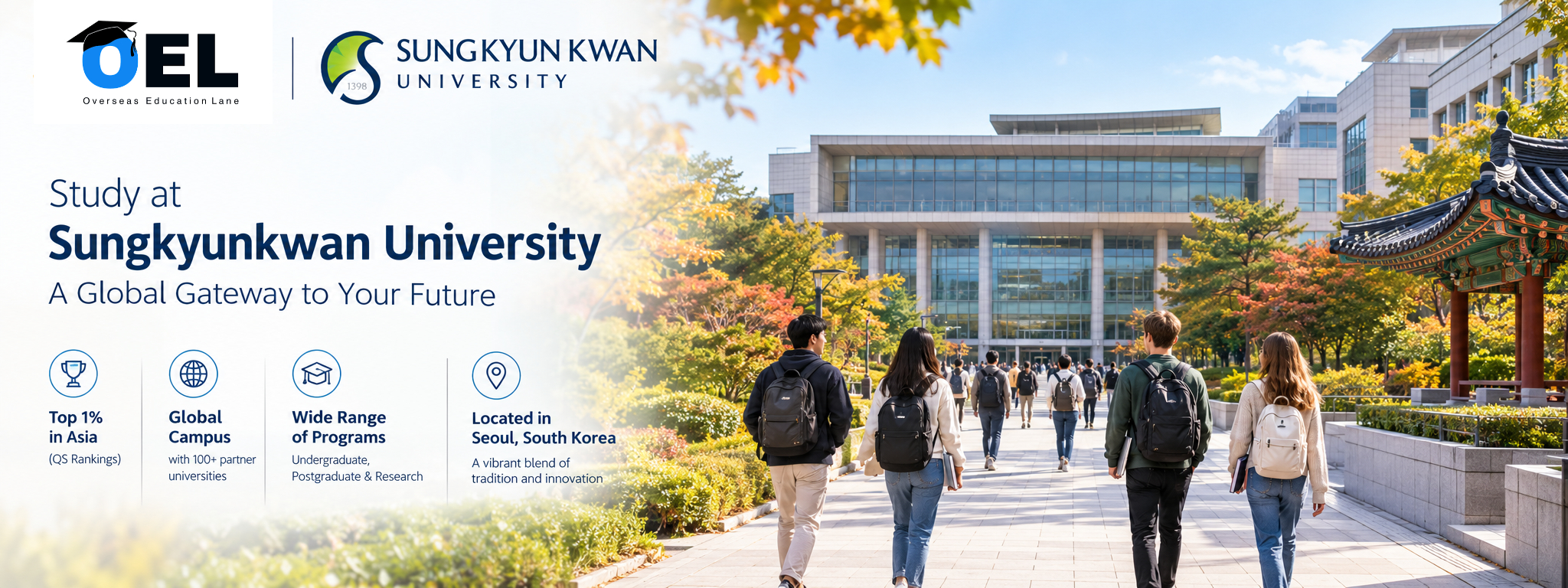
Sungkyunkwan University: Admissions, Fees & Scholarships
Are you planning to study in South Korea and looking for a university that combines academic learning, research opportunities, and an international student environment? Sungkyunkwan University (SKKU) is an option worth exploring for Indian and other international students considering undergraduate or postgraduate education in South Korea.
With campuses in Seoul and Suwon, SKKU offers a range of academic pathways across different disciplines. However, choosing a university involves more than its reputation. Students also need to understand admission requirements, language proficiency, tuition costs, scholarship opportunities, and the application process.
This guide explains what international students should know before applying to Sungkyunkwan University, including where to find the latest official admission information.
___________________________________________________________________________________________________________
About Sungkyunkwan University, South Korea
Sungkyunkwan University, commonly known as SKKU, is a South Korean university with a long academic history and a modern higher education environment. Its academic facilities are spread across two main campuses:
• Humanities and Social Sciences Campus: Located in Seoul, this campus supports studies in humanities, social sciences, and related fields.
• Natural Sciences Campus: Located in Suwon, Gyeonggi-do, this campus supports studies in science, engineering, and other related disciplines.
The university offers undergraduate and graduate admission routes for international applicants. The programs available, their teaching languages, and their eligibility requirements vary by academic department and admission track.
Students can explore current program listings, application announcements, and admission guides through the university's official international admissions portal.
___________________________________________________________________________________________________________
Courses at Sungkyunkwan University for International Students
SKKU offers academic opportunities at undergraduate and postgraduate levels. The right course depends on your previous qualifications, academic interests, language proficiency, and intended career path.
Undergraduate programs
Students who have completed secondary education can explore eligible bachelor's degree programs through SKKU's international undergraduate admissions process.
Depending on the admission year, available academic fields may include areas such as:
• Business and economics
• Humanities and social sciences
• Computer science and engineering
• Natural sciences
• Biotechnology and related scientific fields
• Other specialized academic disciplines
This is a general overview of possible study areas, not a guaranteed list of programs open to international applicants in every intake. Always check the latest undergraduate admission guide to confirm the exact program name, language track, and availability.
Master's and PhD programs
Students who already hold a bachelor's degree may explore eligible master's programs, while applicants with the appropriate postgraduate qualifications may consider doctoral or integrated graduate programs.
Graduate applicants should review the requirements of their intended department carefully. Some research-based programs may require additional preparation, contact with a prospective academic adviser, a research proposal, or other department-specific documentation.
The university publishes separate information for graduate applicants through its official international admissions portal.
___________________________________________________________________________________________________________
Sungkyunkwan University Admission Requirements
Admission requirements depend on the degree level, academic department, nationality criteria, and language of instruction. Meeting the minimum requirements does not necessarily guarantee admission.
Eligibility for undergraduate admission
International undergraduate applicants should review the current admission guide to determine whether they meet the university's nationality and educational background requirements.
Applicants may need to prepare:
• High school graduation certificate or an accepted equivalent.
• Academic transcripts and supporting educational documents.
• Passport and documents confirming nationality, as required by the university.
• Family relationship or other supporting documents, where specified.
• Korean or English language proficiency evidence, depending on the selected track.
• Personal statements, recommendation letters, or additional documents if required by the program.
Applicants who are still completing high school should confirm the university's rules for expected graduates and the deadline for submitting final graduation documents.
Eligibility for master's and PhD admission
Postgraduate applicants generally need the relevant previous degree for their intended program. For example, a master's applicant typically needs an eligible bachelor's degree, while a doctoral applicant generally needs a qualifying master's degree or another accepted qualification specified by the program.
Additional requirements may include:
• Academic transcripts and degree certificates.
• Proof of language proficiency.
• A study plan or research-related documents.
• Letters of recommendation, where required.
• A portfolio, interview, written test, or other department-specific materials, where applicable.
Important: Do not assume that the same eligibility criteria apply to every course. Review the latest admission guide for your intended degree and department before preparing your application.
___________________________________________________________________________________________________________
English and Korean Language Requirements
Language proficiency is an important part of the SKKU application process. The required evidence depends on the program and whether the applicant applies through an English-language or Korean-language track.
Korean language proficiency
Applicants to Korean-track programs may need to provide an accepted Korean language qualification, such as a Test of Proficiency in Korean (TOPIK) score, or another form of evidence explicitly accepted in the current admission guide.
Some admission cycles may recognize eligible Korean language course completion certificates under specified conditions. Applicants should confirm which certificates and proficiency levels are accepted for their selected program.
English language proficiency
For programs or admission tracks with English-language requirements, applicants may need to provide an accepted English proficiency test result or other evidence permitted by the university.
Do not assume that IELTS or TOEFL is mandatory for every program, or that every program accepts the same alternative qualifications. Check the current guide for accepted tests, minimum scores, exemptions, and document submission rules.
Students who have not yet met a language requirement should investigate their options before applying rather than relying on assumptions about conditional admission.
Sungkyunkwan University Tuition Fees and Living Costs
The cost of studying at SKKU depends on the degree level, academic department, program, and applicable university fees. There is no single tuition amount that accurately represents every undergraduate and postgraduate course.
Before deciding on a budget, review the current admission guide and fee information for your selected program.
Your estimated study budget should account for:
• Tuition fees: These vary by program and academic level.
• Admission or entrance fees: Confirm whether a separate fee applies to your intake.
• Accommodation: Consider university residence options and private housing.
• Food and daily expenses: Include meals, transport, mobile services, and personal spending.
• Insurance and visa-related expenses: Check the requirements applicable to your circumstances.
• Study materials: Budget for books, equipment, software, or research-related costs where relevant.
Students should also check whether a scholarship covers tuition only or provides additional assistance. A tuition waiver does not automatically cover accommodation, meals, travel, or other living expenses.
___________________________________________________________________________________________________________
Sungkyunkwan University Scholarships for International Students
Scholarships can help eligible international students reduce their education expenses at SKKU. However, scholarship availability, selection criteria, and award amounts differ by degree level and scholarship category.
Undergraduate scholarships
SKKU publishes information about admission scholarships for international undergraduate students. According to the university's official scholarship information, selected incoming students may receive tuition-related benefits based on admission evaluation results.
The university also lists scholarship opportunities linked to Korean language proficiency and other eligibility criteria. The applicable conditions depend on the scholarship category and admission cycle.
Review the official SKKU undergraduate scholarship information to check current eligibility and benefits.
Graduate scholarships
International graduate students may be considered for admission scholarships and merit-based awards, subject to the relevant program and university rules.
For example, SKKU's published graduate scholarship information describes admission scholarship levels for eligible students in specified academic fields and merit-based support for qualifying students in subsequent semesters.
Scholarships may be competitive and may require students to maintain particular academic performance or satisfy other conditions.
Read the official SKKU graduate scholarship information before estimating how much financial assistance you may receive.
Can Indian students apply for scholarships?
Indian applicants may explore scholarships for which their nationality, academic background, selected program, and other qualifications make them eligible. However, eligibility should be confirmed from the specific scholarship announcement.
Students should not assume that every scholarship is open to all nationalities or that a scholarship will be awarded automatically to every admitted applicant.
___________________________________________________________________________________________________________
How to Apply to Sungkyunkwan University
A well-organized application process can help you avoid missing important requirements.
Step 1: Select your course
Decide whether you want to pursue an undergraduate, master's, or doctoral degree. Check that your intended program is open to international applicants in the relevant intake.
Step 2: Review the latest admission guide
Visit SKKU's official international admissions portal and download the guide for your degree level and intake. Confirm the application dates, academic requirements, language criteria, and required documents.
Step 3: Prepare your documents
Collect your educational records, passport, nationality documents, language test results, and any program-specific materials. Follow the university's instructions for translations, certifications, and document delivery.
Step 4: Submit the application
Complete the online application through the designated application system and pay any applicable application fee. Follow the official instructions carefully, including the rules for uploading documents and submitting original copies.
Step 5: Track your application
Check the university's announcements for interviews, written tests, results, scholarship decisions, and enrollment instructions, where applicable.
Step 6: Prepare for enrollment and your student visa
After receiving an admission offer, follow the university's enrollment instructions and confirm the documents needed for the relevant South Korean student visa. Admission and visa approval are separate processes, so students should not assume that an offer guarantees visa issuance.
___________________________________________________________________________________________________________
Why Consider Sungkyunkwan University?
SKKU may be worth considering if you are looking for:
• Undergraduate or graduate study opportunities in South Korea.
• Academic options across multiple disciplines.
• Access to university campuses in Seoul and Suwon.
• Potential scholarship opportunities for eligible international applicants.
• An opportunity to experience Korean academic and cultural life.
The right choice ultimately depends on your academic goals, budget, preferred language of instruction, and career plans. Compare the course curriculum, fees, eligibility requirements, and scholarship conditions before making your final decision.
___________________________________________________________________________________________________________
Frequently Asked Questions About Sungkyunkwan University
1. Is Sungkyunkwan University open to international students?
Yes. SKKU publishes international admissions information for undergraduate and graduate applicants. Students must meet the relevant requirements for their selected program and intake.
2. Does SKKU offer scholarships to international students?
Yes. The university publishes undergraduate and graduate scholarship opportunities for eligible international students. Benefits and selection criteria vary by scholarship category and academic performance.
3. Do I need IELTS or TOPIK to study at SKKU?
The answer depends on the program and admission track. Applicants should check the latest admission guide to confirm accepted language qualifications, minimum scores, and any applicable exemptions.
4. How much does it cost to study at Sungkyunkwan University?
Tuition fees vary by program and academic level. Students should consult the current university fee information and budget separately for accommodation, living expenses, insurance, and other costs.
5. When should I apply to SKKU?
Application schedules differ by degree level and intake. Check the official admissions portal for the latest application announcements and deadlines before preparing or submitting your documents.
___________________________________________________________________________________________________________
Get Help Applying to Sungkyunkwan University with OEL
Planning to apply to Sungkyunkwan University from India or another country? Overseas Education Lane (OEL) can help you understand your study options, review program eligibility, prepare your application documents, explore scholarship opportunities, and navigate the next steps in your study-abroad journey.
Contact OEL to enquire about a free counselling session and receive guidance tailored to your academic background, preferred course, budget, and future goals.
Admission deadlines, tuition fees, scholarship benefits, and eligibility requirements may change. Always confirm the latest details through the official SKKU links provided above before applying.
Other Links
Top Destinations
Our Services
Contact Us
-
 Overseas Education Lane
-
 +91 892 992 2525
-
 [email protected]
-
[email protected]