Canada
USA
UK
Australia
Korea
Ireland
New Zealand
Europe
Japan
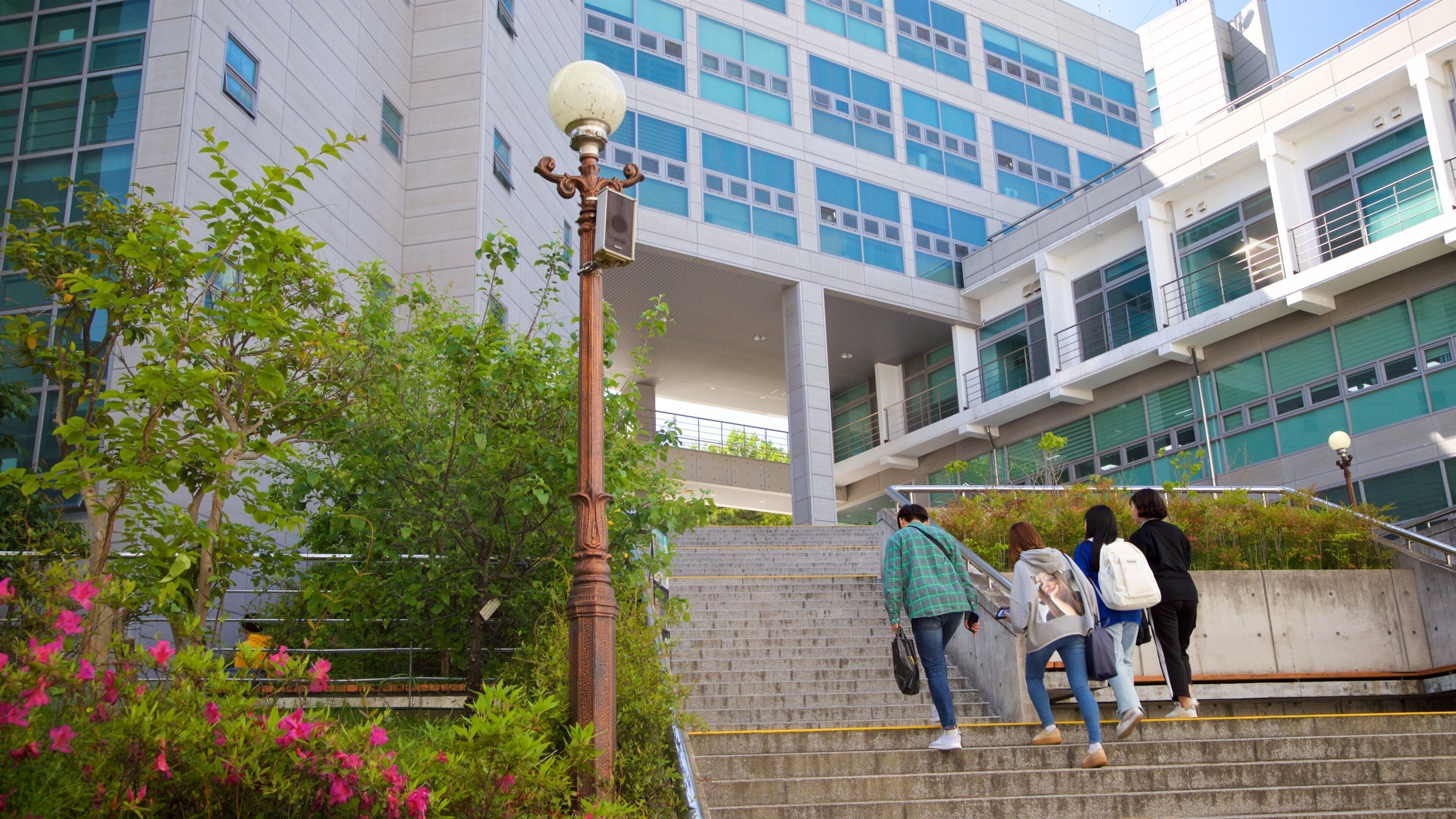
Although the University started initially with just two faculties, the Faculty of Humanities and the Faculty of Fisheries, since then, it has grown into a major research level institution covering all the major disciplines within academia. Today, the University enjoys its reputation as one of top universities in Korea.
The University now comprised fifteen colleges, one independent division, one general graduate school, fourprofessional graduate schools and five special graduate schools, and contributes to the development of the nation by producing prominent experts and talented leaders.
Pusan National University, marking its 79th anniversary in 2025, has become the No. 1 national university in research and educational competency, and its tradition and ability are estimated highly. More than 270,000 PNU alumni have taken responsibility for the development of their communities and the country, and about 33,500 students, 1,200 professors, and 730 faculty members are working as one to develop PNU, an institution based on the principles of truth, freedom, and service.
South Korea, Busan, Busan, 43241
Pusan National University
fees may vary according to university current structure and policy
Pusan National University
fees may vary according to university current structure and policy
Pusan National University
fees may vary according to university current structure and policy
Pusan National University
fees may vary according to university current structure and policy
Pusan National University
fees may vary according to university current structure and policy
Pusan National University
fees may vary according to university current structure and policy
Pusan National University
fees may vary according to university current structure and policy
Pusan National University
fees may vary according to university current structure and policy
Pusan National University
fees may vary according to university current structure and policy
Pusan National University
fees may vary according to university current structure and policy
Pusan National University
fees may vary according to university current structure and policy
| Ranking | Form | Year | Type |
|---|---|---|---|
| 473 | QS | 2026 | Public |
| 524 | QS | 2025 | Public |
The PNU dormitories, also known as “college living halls”, accommodate 16% of the student body for a total of 4,436 students. The basic structure of the college living hall is 2 students to a room, with shared communal facilities such as showers, toilets, and a gym. The BTL (Built-Transfer-Lease) dormitories, Ungbi Hall (in Busan) and the Haengrim Hall (in Yangsan), both built in 2009, have individual heating systems, air conditioning, toilets, and showers to minimize the inconveniences of communal life.
For the safety and security of its students, each college living hall is set up with an access control system, which requires the use of a multi-functional student ID card to gain access into the buildings. This enhances the accuracy of identifying students without disrupting ease of access for its residents. Also, the buildings are equipped with facilities such as dining rooms, lounges, computer rooms, reading rooms, and laundry rooms for greater convenience and hassle-free living that promotes studying.
Pusan National University (PNU) boasts a strong graduate employment rate ranging between 55% and 60%, often ranking in the top 15 alongside other national universities in South Korea. Graduates secure roles in top local industries, global conglomerates (like LG and Samsung), and public sector institutions across the country.
The nearest international airport to Pusan National University (PNU) is Gimhae International Airport (PUS). It is located approximately 18 km west of the university.
[email protected]. [1]