If you’ve been scrolling through Instagram Reels of Seoul’s neon-lit streets or binging K-Dramas like Start-Up, you’ve probably had the thought: "Could I actually live there?"
For a long time, Indian students dismissed South Korea as a study destination for one massive, glaring reason: The Language Barrier. The assumption was simple—if you don't speak fluent Korean, you can't graduate.
But in 2025, that narrative is outdated.
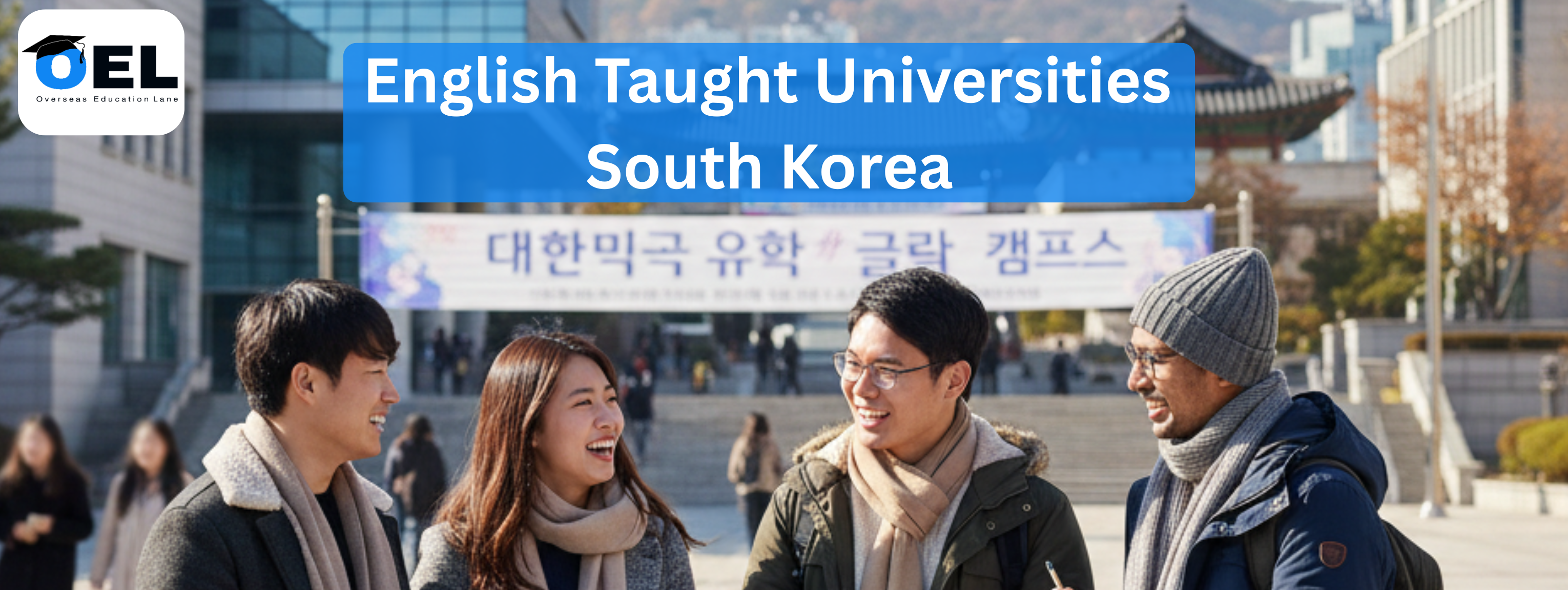
South Korea is aggressively internationalizing its higher education. Facing a demographic cliff, the government is rolling out the red carpet for global talent, specifically targeting STEM and business minds from India. The result? A surge in English-taught universities in South Korea that allow you to earn a world-class degree without mastering Hangul before you arrive.
As an education consultant who has guided hundreds of students from various parts of India, I’m going to walk you through exactly how to navigate this landscape. No fluff, just the roadmap you need.
Why South Korea is the New "It" Destination for Indians
Before we dive into the specific colleges, let's address the elephant in the room. Why choose Korea over the US, UK, or Canada?
1. The ROI is Unbeatable
Cost of studying in South Korea for Indian students is a fraction of the West. While a US degree might set you back ₹40-50 Lakhs a year, a semester at a top Korean university often costs between ₹2.5 Lakhs to ₹4.5 Lakhs. When you factor in the generous scholarship schemes, many Indian students end up paying less than they would at a private university in India.
2. A Tech & Innovation Playground
If you are an engineering or CS student, Korea is paradise. Home to Samsung, Hyundai, and LG, the industry-academia link here is tight. Many English-taught universities in South Korea design their curriculum specifically to feed into these tech giants.
3. Safety and Lifestyle
Seoul is arguably one of the safest cities on earth. As an Indian student, the freedom to walk home at 2 AM without fear is a culture shock in the best way possible.
The Top English-Taught Universities in South Korea
1. Yonsei University (Underwood International College)

If you want prestige, this is it. Part of the "SKY" universities (Korea’s Ivy League), Yonsei has a dedicated college called Underwood International College (UIC).
The Vibe: It feels like a liberal arts college in the US, but located in the heart of Seoul (Sinchon).
The Programs: They offer majors like Comparative Literature, Economics, and International Studies entirely in English. For STEM students, the ISE (Integrated Science and Engineering) division covers Nano Science and Bio-convergence.
Why Indians Love It: You get the "SKY" brand name on your CV, which opens doors back in India and globally.
2. KAIST (Korea Advanced Institute of Science and Technology)

For the engineers reading this—KAIST is the MIT of Korea.
The English Factor: It is one of the few English-taught universities in South Korea where English is the primary medium of instruction for almost 90% of classes, specifically in engineering and sciences.
KAIST International Admission 2025: If you get in, you are almost guaranteed a scholarship. KAIST offers a full tuition waiver plus a monthly allowance (approx. ₹20,000 - ₹25,000) to admitted international students. It’s highly competitive, but the payoff is massive.
3. SolBridge International School of Business
Located in Daejeon (Korea's Silicon Valley), SolBridge is unique because it was built exclusively for international students.
The Curriculum: 100% English. You literally cannot take a business class in Korean here.
Specialization: SolBridge International School of Business reviews often highlight its strong focus on Asian management styles combined with American business theory. It’s perfect for BBA or MBA aspirants who want to bridge the gap between Indian and East Asian markets.
4. SUNY Korea & The Incheon Global Campus (IGC)
This is a cheat code for students who want a Western degree but the Korean experience. The Incheon Global Campus hosts extended campuses of:
SUNY (State University of New York) Stony Brook (Great for CS and Math)
FIT (Fashion Institute of Technology) (For the designers)
George Mason University (Business and Economics)
University of Utah Asia
You study in Korea, but your degree says "SUNY" or "University of Utah"—no mention of "Korea campus." It is fully English, accredited in the US, and allows you to spend one year at the home campus in America.
5. Sejong University (English Tracks)
For students who might not have the 98% grades for KAIST but still want a solid education in Seoul, Sejong is a fantastic option. They have dedicated English tracks in Hospitality & Tourism Management (one of the best in Asia) and Computer Engineering.
Financing Your Dream: Scholarships for Indian Students

Money shouldn't be a barrier. The Korean government is actively throwing money at smart international students.
The GKS Scholarship 2026 for Indian Students
The Global Korea Scholarship (formerly KGSP) is the "golden ticket."
What it covers: 100% Tuition, Airfare (round trip), Medical Insurance, and a monthly stipend of roughly 1,000,000 KRW (approx. ₹60,000).
The Catch: For the general track, you usually have to do a 1-year Korean language course (paid for) before starting your degree. However, some research programs allow you to skip this if your English/Korean proficiency is already high.
Timeline: Keep an eye out in September/October 2025 for the 2026 undergraduate intake.
Surviving & Thriving: The Indian Student Experience
One of the most common questions I get is about daily survival. "Will I find dal and rice?" "Are people friendly?"
Indian Students in South Korea Problems vs. Reality
Vegetarian Food: It used to be hard, but it's getting easier. Seoul has plenty of Indian restaurants and vegan cafes now. University cafeterias at places like KAIST often label ingredients clearly.
Part-Time Jobs: You can work part-time (usually up to 20 hours/week) after your first semester. Part-time jobs in South Korea for international students often include working in English cafes, translation help, or university labs. The hourly wage is decent (around ₹600/hour).
The "Alien" Feeling: You will stand out. But in university towns, the curiosity is usually positive. The key is to join clubs (Dongari) where you can bond over shared interests like photography or hiking, even if your Korean is broken.
A Note on Visas
Graduating from one of these English-taught universities in South Korea sets you up perfectly for the D-10 (Job Seeker) visa. Korea recently relaxed visa points for STEM graduates, making it easier for Indian engineers to stay and work for companies like LG or Samsung after graduation.
If you are a student, from India you should ask for yourself. Is It Right For You?
Choosing to study in Korea is not just about choosing a university; it's about choosing a future track that differentiates you from the millions of graduates with generic degrees. Whether you choose the prestige of Yonsei, the tech-focus of KAIST, or the American curriculum at SUNY Korea, the options for English-taught universities in South Korea are more robust than ever.
You get the safety, the technology, the culture, and the savings—without losing the global language advantage.
Frequently Asked Questions (FAQs)
Q1: Can I find universities in South Korea without IELTS?
Technically, yes. Some universities may accept a "Medium of Instruction" certificate from your Indian school if it was English-medium. However, top-tier English-taught universities in South Korea (like Yonsei or KAIST) strongly prefer IELTS or TOEFL scores to prove you can handle the coursework.
Q2: What is the average cost of living for an Indian student?
Budget around ₹40,000 to ₹60,000 per month for living expenses (dormitory + food + transport) if you live modestly. Seoul is more expensive than smaller cities like Daejeon or Pohang.
Q3: Can I stay and work in Korea after my Masters?
Yes! The post-study work visa South Korea (D-10) allows you to stay for 6 months to look for a job, renewable for up to 2 years. If you graduate from a Korean university, you get bonus points for the F-2 (Resident) visa.
Q4: Is it hard for vegetarians?
It requires effort. You won't find "veg" marks on every menu like in India. You will likely cook your own meals often or stick to specific restaurants. But with apps like Coupang Eats, accessing ingredients is easy.
Q5: Are scholarships available for average students?
Yes. While GKS is for toppers, many private universities offering English-taught universities in South Korea programs (like SolBridge) offer 30-70% tuition waivers based on your IELTS score and interview performance, not just your 12th-grade marks.
Navigating the admission tracks, scholarship quotas, and visa rules for South Korea can be tricky. You don't have to figure it out alone.
At Overseas Education Lane (OEL), we specialize in decoding these specific English-track admissions for Indian students. Whether you are eyeing a full ride at KAIST or a Global Business degree in Seoul, our team can help you craft the perfect application. Connect with us today to turn your K-dream into a degree.
Other Links
Top Destinations
Our Services
Contact Us
-
 Overseas Education Lane
-
 +91 892 992 2525
-
 [email protected]
-
[email protected]