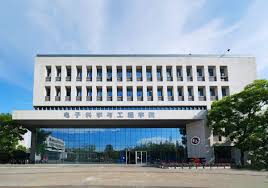
The Bachelor’s in Electronic Information Engineering at the University of Electronic Science and Technology of China (UESTC) is a four-year undergraduate engineering program designed to train students in the theory, technology, and application of electronic and information systems. UESTC, located in Chengdu and directly administered by China’s Ministry of Education, is one of the country’s top universities in electronics, information science, and communication engineering, and is part of national initiatives such as Project 211, Project 985, and the Double First Class program. This major focuses on building a strong foundation in mathematics, physics, electrical and electronic engineering, and information science, while emphasizing the acquisition, transmission, processing, and control of information signals. During the first half of the program, students study fundamental subjects such as calculus, linear algebra, probability and statistics, college physics, programming, circuit theory, and basic electronics. In later years, professional courses cover areas including analog and digital electronic circuits, signals and systems, electromagnetic fields and waves, digital signal processing, communication principles, microprocessors and embedded systems, modern communication technology, radar systems, and network fundamentals. Practical training is an essential component of the curriculum and includes laboratory experiments, electronic system design projects, engineering practice, internships, and a final-year graduation project or thesis. The program aims to develop graduates with solid theoretical knowledge, strong hands-on engineering skills, problem-solving ability, innovation awareness, and teamwork competence. Graduates are well prepared for employment in telecommunications, electronics manufacturing, semiconductor industries, information technology companies, research institutes, and government or defense sectors, as well as for pursuing master’s or doctoral studies in electronic information, communication engineering, signal processing, and related fields in China or abroad.
NOTE: The university may have additional program-specific eligibility requirements.
It is recommended to verify these on the official university website.
 Canada
 USA
USA
 UK
UK
 Australia
 Korea
Korea
 Ireland
 New Zealand
 Europe
 Japan
Japan