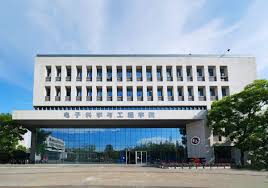
The Master’s in Biomedical Engineering at the University of Electronic Science and Technology of China (UESTC) is a two-year, full-time graduate program that integrates life science, information science, and engineering to equip students with advanced theoretical knowledge and research skills in biomedical technologies. Biomedical Engineering at UESTC is one of the university’s established interdisciplinary programs, with a history dating back to 1986 and a strong faculty team that includes senior professors and international academics, supported by well-equipped laboratories such as the Key Laboratory of Neuroinformation of the Ministry of Education. The program aims to develop graduates who understand cutting-edge research trends and have systematic expertise in areas like human anatomy and physiology, biomedical signal processing, imaging and medical instrument design, computational modeling, bioinformatics, and neurobiology, and who are capable of conducting independent research, contributing to academic publications, and demonstrating professional ethics and scientific rigor. During the course of study, students typically take advanced courses tailored to their chosen orientation and participate in research projects under faculty supervision, culminating in the completion of a master’s thesis that reflects original work and technical competence. Research and study directions include brain functions & neural information engineering (e.g., EEG/fMRI data processing, brain-computer interfaces), medical instruments, medical image and signal processing, bioinformatics, and molecular biology, among others, giving students opportunities to focus on high-impact areas of biomedical engineering. International students are usually required to complete compulsory Chinese language and cultural courses and achieve a certain level of Chinese proficiency (e.g., HSK 3) before graduation. Graduates are well positioned for careers or further study in biomedical research, medical device development, healthcare technology, signal processing, and related interdisciplinary fields, with some programs offering international collaborations or dual-degree opportunities with partner universities.
NOTE: The university may have additional program-specific eligibility requirements.
It is recommended to verify these on the official university website.
 Canada
 USA
USA
 UK
UK
 Australia
 Korea
Korea
 Ireland
 New Zealand
 Europe
 Japan
Japan