Home
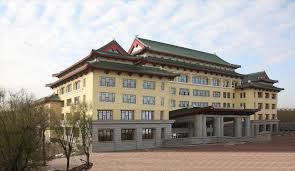
Harbin Medical University, located in Harbin, the "Ice City" of northern China, is a prestigious medical university with a rich historical and cultural heritage. It was formed by the merger of the Binjiang Medical College (renamed Harbin Medical University in 1938), founded in 1926 by Dr. Wu Lien-teh, a pioneer of modern medicine in my country, and the first and second branches of the former Xingshan (now Hegang City) branch of the Chinese Medical University, which was originally established in Ruijin, Jiangxi Province in 1931 by the Communist Party of China as the Chinese Workers' and Peasants' Red Army Medical School. Over nearly a century of development, the university has inherited Dr. Wu Lien-teh's spirit of "sincere patriotism and self-reliance," carried forward the glorious tradition of the Chinese Workers' and Peasants' Red Army Medical School of "political steadfastness and excellent skills," upheld the motto of "upright and honest, learned in medicine," and practiced the educational philosophy of "establishing the university for students and scholars, and strengthening the university through academic excellence and a strong academic atmosphere." It has deepened its development strategy of "aggregating strength, benefiting talents, optimizing disciplines, consolidating undergraduate education, promoting clinical practice, strengthening academics, and enriching culture," resulting in continuous enhancement of its comprehensive strength and a considerable scale of development with distinctive characteristics. The university is jointly supported by the Ministry of Education and the province, a university in Heilongjiang Province to build a first-class domestic university, the Chinese leading unit of the Sino-Russian Medical University Alliance, a national base for basic science research and teaching talent training, one of the first batch of universities piloting seven-year higher medical education programs under the Ministry of Education, and a university under the Ministry of Education to build a high-level public health school.
The university comprises 18 secondary schools and 8 affiliated institutions. It has 10 affiliated hospitals, including 5 directly affiliated hospitals. There are 19,880 faculty and staff members (505 at the Daqing campus), 16,507 undergraduate students (8,564 at the Daqing campus), 8,915 graduate students (2,524 doctoral students and 6,391 master's students), and 172 international students. The university boasts 2 academicians of the Chinese Academy of Engineering, 2 members of the Chinese Academy of Medical Sciences, 1 recipient of the Florence Nightingale Medal, 3 members of the State Council Academic Degrees Committee, 18 members of the Ministry of Education's Higher Education Teaching Steering Committee, 1 member of the National Medical Professional Degree Postgraduate Education Steering Committee, 4 national-level distinguished teachers, 72 individuals selected for national talent programs, 5 national outstanding young and middle-aged scientific and technological experts, 8 recipients of the Ministry of Education's New Century Excellent Talents Award, 14 Ministry of Health outstanding young and middle-aged experts, and 99 individuals enjoying special government allowances from the State Council. There are 4 national-level Huang Danian-style teacher teams, 4 national-level teaching teams, and 2 Ministry of Education innovation teams. There are 42 "Longjiang Scholars", 38 people enjoying special allowances from Heilongjiang Province, 41 leading professional and technical talent teams in Heilongjiang Province, 8 "Leading Goose" teams and 15 "Spring Goose" teams in Heilongjiang Province.
The university has 9 doctoral degree programs in first-level disciplines, 11 master's degree programs in first-level disciplines, 3 doctoral professional degree programs, 7 master's professional degree programs, 6 postdoctoral research stations, and 30 undergraduate majors. It boasts 2 national key disciplines, 1 national key development discipline, and 21 provincial key disciplines (groups). It has 1 national emergency medical rescue base, 49 national key clinical specialty construction projects, 1 national standardized residency training demonstration base, and 9 national standardized residency training key specialty bases. It has 12 national first-class undergraduate major construction points and 8 provincial first-class undergraduate major construction points. Nine disciplines are ranked in the top 1% globally by ESI, and clinical medicine is ranked in the top 0.1%. The university has 1 national key laboratory, 1 international science and technology cooperation base, 1 international joint laboratory, 5 key laboratories of the Ministry of Education, 3 key laboratories of the National Health Commission, 33 provincial key laboratories, and 6 provincial international science and technology cooperation platforms. The university boasts one national-level innovative experimental zone for talent cultivation, four national-level experimental teaching demonstration centers, one national-level virtual simulation experimental teaching center, one national-level clinical teaching and training demonstration center, three Ministry of Education virtual teaching and research office pilot projects, two Ministry of Education "Great Ideological and Political Education" practice teaching bases, two provincial-level modern industry colleges, and one provincial-level innovation and entrepreneurship demonstration base. It offers 40 national-level first-class undergraduate courses, 12 national-level excellent courses, 12 national-level excellent resource-sharing courses, four national-level excellent video open courses, one national-level excellent online open course, two national-level bilingual teaching demonstration courses, one Ministry of Education brand course taught in English for international students, two Ministry of Education excellent online open courses for international students in clinical medicine (taught in English), and 57 provincial-level first-class undergraduate courses.
Over the past decade, he has served as chief editor of 96 textbooks planned and reprinted by the Ministry of Education and the National Health Commission, winning one first prize and one second prize in the National Textbook Construction Award, and being named an Advanced Individual in National Textbook Construction. He has been approved for three pilot projects under the Ministry of Education's Excellent Physician Education and Training Program, one Ministry of Education Curriculum Ideological and Political Education Demonstration Project, and 20 provincial-level Curriculum Ideological and Political Education Demonstration Projects. He has won three first prizes in the National Higher Education Ideological and Political Course Teaching Demonstration Competition, eight first prizes in the National Higher Education Teachers' Teaching Innovation Competition, and three silver and 26 bronze prizes in the China International "Internet+" College Student Innovation and Entrepreneurship Competition. He has won six second prizes in the National Teaching Achievement Awards and 39 provincial-level Teaching Achievement Awards. He has secured 619 provincial-level educational research projects and published 1496 national-level educational and teaching papers, including 37 SCI-indexed papers. He has received 8510 research projects of various types, including one national international cooperation project, five national major science and technology projects, and 14 national key research and development projects. The university has been granted 1,437 National Natural Science Foundation of China (NSFC) projects, including 1 NSFC Innovative Research Group Project, 1 NSFC Major Project, 9 NSFC Major Research Plan Projects, 15 NSFC Key Projects, 6 National Major Scientific Instrument Development Projects, 13 International (Regional) Cooperation and Exchange Projects, 22 Joint Fund Projects, and 1 National Social Science Foundation of China Key Project. It has received 576 awards, including 1 second prize of the National Science and Technology Progress Award, 2 first prizes of the Ministry of Education Higher Education Outstanding Scientific Research Achievement Award (Scientific Research), 1 first prize of the Chinese Medical Science and Technology Award, 1 China Patent Award of Excellence, 1 Heilongjiang Provincial Science and Technology Award (Highest Science and Technology Award), 24 first prizes, and 142 second prizes. It has published 25,107 scientific research papers, including 1,421 SCI-indexed papers. The university holds 1,353 valid patents, including 360 invention patents.
 Canada
 USA
USA
 UK
UK
 Australia
 Korea
Korea
 Ireland
 New Zealand
 Europe
 Japan
Japan