Canada
USA
UK
Australia
Korea
Ireland
New Zealand
Europe
Japan
The history of Toyo University began in 1887 with the establishment of Shiritsu Tetsugakukan (Private Academy of Philosophy) by philosopher Dr. Enryo Inoue. In the early years of Japan’s modernization, Enryo brought forth the idea of “philosophy as the basis of thought for Japanese people living in the new era,” and showed the importance of “carrying out philosophy.” He stated: “Philosophy is the study that determines the principles behind all phenomena. Politics and law, needless to say, but even fields as distant as natural science and art should be founded on philosophy.” Wishing to “benefit those who are not financially well-off and those who do not have the luxury of time,” Enryo sought to open the doors of Tetsugakukan to as many people as possible by lowering the school’s tuition. He was among the first to establish a forerunner to today’s system of distance learning by compiling lectures, and distributing them to students who would otherwise not have access to the educational offerings of the school. The spirit of Enryo lives on through the evening courses of today. Seeking to provide learning opportunities to those unable to attend regular courses, Enryo went on lecture tours all over Japan, an activity that became his lifework. He gave as many as 5,291 lectures in 60 cities and 2,198 towns and villages over a period of 27 years. Moreover, with the ambition to transform “Japan as a nation of the Orient” into “Japan as a world nation,” Enryo traveled around the world three times to watch and learn from other countries during the Meiji era. This reflects his passion to forge the way for Japan to enter a new age of education.
Japan, Tokyo, Tokyo, 112-8606
Toyo University
fees may vary according to university current structure and policy
Toyo University
fees may vary according to university current structure and policy
Toyo University
fees may vary according to university current structure and policy
Toyo University
fees may vary according to university current structure and policy
Toyo University
fees may vary according to university current structure and policy
Toyo University
fees may vary according to university current structure and policy
Toyo University
fees may vary according to university current structure and policy
Toyo University
fees may vary according to university current structure and policy
Toyo University
fees may vary according to university current structure and policy
Toyo University
fees may vary according to university current structure and policy
Toyo University
fees may vary according to university current structure and policy
Toyo University
fees may vary according to university current structure and policy
| Ranking | Form | Year | Type |
|---|---|---|---|
| 711 | QS Asian University Rankings | 2026 | Private |
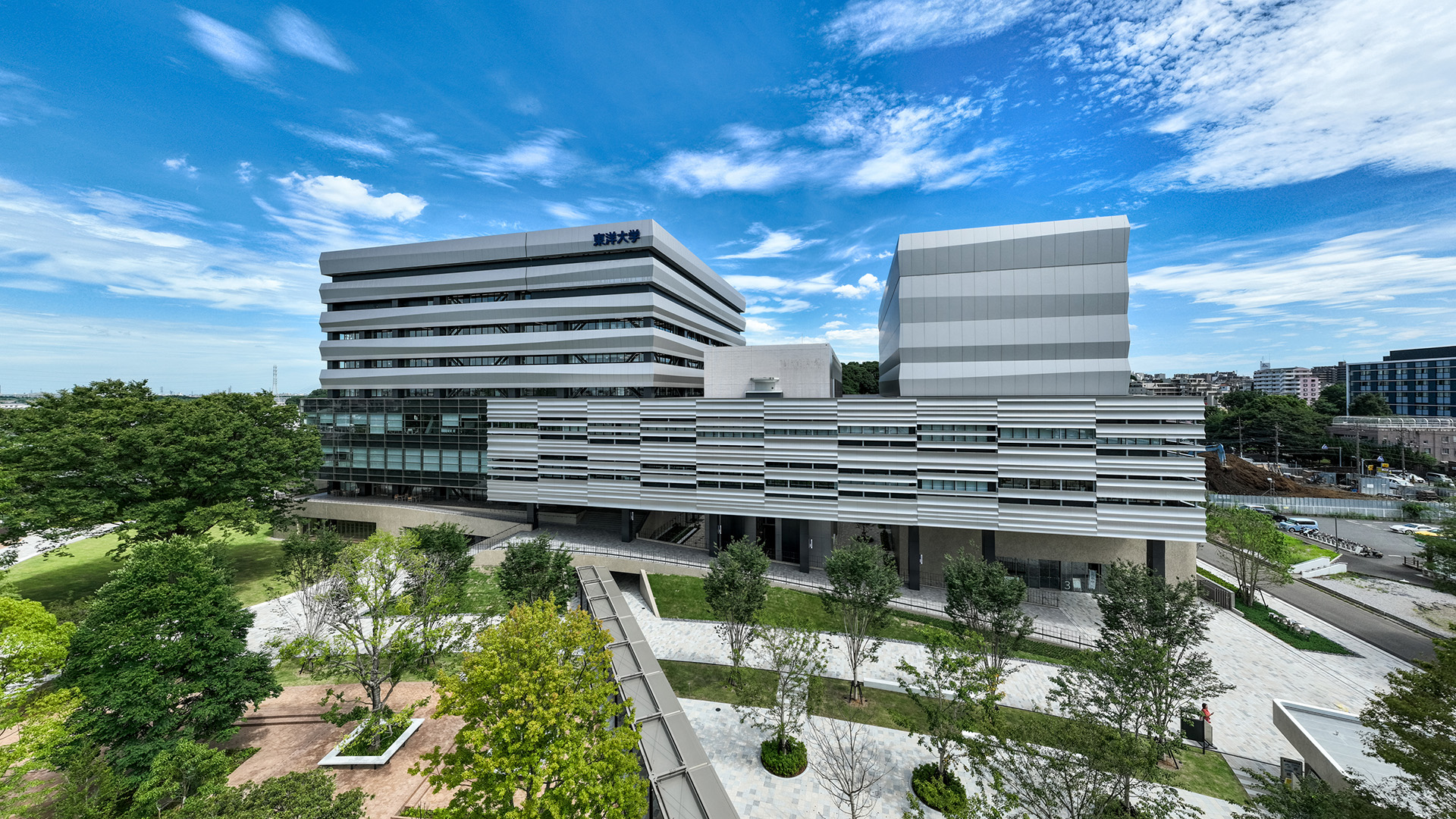
The International House is conveniently located a 15-minute walk from Hakusan Campus, and offers a quiet and peaceful environment. It consists of single, double, and triple unit residents, and residents in multiple unit residents can interact with each other. As the commute to Hakusan Campus is short, it is recommended for students who want to make the most of their time and who want to focus on their studies and research. We aim for half of the residents to be Japanese students and the other half to be international students.
Toyo University offers strong placement support, with around 40% of international undergraduate students securing employment in Japan after graduation. The university provides specialized career education, internships in Tokyo and regional cities, and Japanese language training to boost employability skills. It is recognized as a top 150 Japanese university, with extensive networking opportunities in Tokyo.
Toyo University's main Hakusan Campus is most conveniently reached from Tokyo Haneda Airport (HND), roughly 58 minutes away via train. Take the Monorail to Hamamatsuchō, then transit to the JR Yamanote Line to Okachimachi, followed by local transport. Narita Airport (NRT) is also accessible with efficient train connections into central Tokyo.